🔑 Key Takeaway
Finding property for sale in italy involves understanding key legal requirements, regional market differences, and potential costs beyond the purchase price.
- Foreign ownership is often permitted based on the principle of reciprocity, meaning your home country must allow Italian citizens to buy property.
- Popular regions like Tuscany and Lake Como offer classic lifestyle investments, while southern regions like Puglia and Sicily may provide significant value.
- The €1 house schemes can be a viable option but often come with substantial renovation costs (€50,000-€100,000+) and strict municipal rules.
- The buying process requires a notary (notaio) and involves various taxes and fees that must be budgeted for.
Read on for our complete guide to making a smart and successful purchase.
The dream of owning a home in Italy—a rustic farmhouse in Tuscany, a chic apartment in Milan, or a sun-drenched villa in Sicily—captures the imagination of many. The unique appeal of Italian culture, lifestyle, and history makes it a compelling place for investment and relocation. However, navigating the market can seem complex for foreign buyers. This guide provides a clear, data-driven roadmap to finding and purchasing property for sale in italy, from legal hurdles to the best locations.
The diversity of the real estate in italy is one of its greatest strengths, offering everything from ancient stone houses to modern, energy-efficient apartments. To help you make an informed decision, this guide covers current market trends, the step-by-step buying process, a detailed regional analysis, and answers to the most common questions foreign buyers ask. We’ll begin by looking at the overall state of the market to provide essential context for your search.
ℹ️ Transparency
This article explores the process of buying property in Italy based on official sources and expert analysis. Our goal is to inform you accurately. trueorgame is an independent publisher and editorial decisions are not influenced by advertisers.
The Italian Property Market in 2025: Trends & Forecasts
The italian property market is characterized by regional diversity and government initiatives aimed at combating depopulation in rural areas. A key demographic trend influencing the market is the high number of unoccupied homes, particularly in smaller towns and villages. According to OSDV, a research observatory, 73 Italian towns have launched 1 euro house programs to address the issue of approximately 30% of Italian homes being unoccupied and projected population declines of 2 million by 2040. This creates a market with two distinct speeds: stability and high demand in prime locations like major cities and tourist hotspots, versus significant opportunities for value in less-populated areas. For those looking to invest in italy, understanding these underlying trends is key to making a smart investment, as nationwide price forecasts can be misleading. For foreign buyers, understanding the legal framework is the first step.
How to Buy Property in Italy as a Foreigner
Legal Requirements & The “Codice Fiscale”
The ability for foreigners to buy property in Italy is primarily governed by the legal principle of reciprocity. This means that a foreigner’s home country must permit Italian citizens to purchase property for that foreigner to be eligible. The Italian Ministry of Foreign Affairs, a government source, confirms that foreigners can enjoy civil rights, including property ownership, “on condition of reciprocity.” For citizens of the European Union, this condition is automatically met. For others, it’s a critical first check. An essential and mandatory step for anyone involved in a property transaction is obtaining an Italian tax code, or Codice Fiscale. This unique identification code is required for nearly all financial activities, including opening an Italian bank account, signing contracts, and paying taxes.
The Role of the Notaio (Notary)
The notaio (notary) is a neutral, state-appointed public official who is essential to the Italian property buying process. The notary’s primary role is to ensure the complete legality of the transaction. Their responsibilities include conducting thorough due diligence, such as performing title searches, checking for any outstanding mortgages or liens, and verifying that the property complies with local building regulations. The notaio drafts the final deed of sale (rogito) and collects all applicable taxes on behalf of the state. It is important to understand that the notary represents the state, not the buyer or seller. For this reason, many foreign buyers choose to hire their own independent lawyer for buying property in italy for added protection and personalized legal advice.
Taxes and Fees
The cost of buying property in italy includes several taxes and fees beyond the property’s sale price. The main taxes involved are the Registration Tax (Imposta di Registro), which is based on the property’s cadastral value; VAT (IVA), which applies if you are buying a new property from a developer; the Mortgage Tax (Imposta Ipotecaria); and the Cadastral Tax (Imposta Catastale). In addition to these, buyers must account for notary fees, which are typically set on a sliding scale based on the property’s value, as well as real estate agent commission fees. According to legal guidelines from the firm Mazzeschi, specific tax benefits, like a reduced 2% registration tax for a first-home purchase, may be available for qualifying buyers who meet certain residency or work requirements.
Best Places to Find Property for Sale in Italy
The best places to find property for sale in italy depend entirely on your goals, balancing investment potential with lifestyle desires. From the rolling hills of Tuscany to the dramatic coastlines of the south, Italy offers a vast range of experiences and property types. This section compares four distinct areas to help you identify which region might be the right fit for you.
| Region | Pros | Cons | Average Price Point | Best For |
|---|---|---|---|---|
| Tuscany | Iconic landscapes, strong rental market, established expat communities. | Higher property prices, can be crowded in tourist seasons. | High | Classic lifestyle investment, property in tuscany italy. |
| Lake Como | Stunning scenery, luxury properties, high-end tourism. | Very high property values, seasonal demand. | Very High | Luxury holiday homes, property lake como italy. |
| Puglia/Sicily | Authentic culture, beautiful coastlines, excellent value. | Less developed infrastructure in some areas, hotter climate. | Low to Medium | Value investment, authentic lifestyle, southern italy property for sale. |
| Abruzzo | Affordable, unspoiled nature, proximity to mountains and sea. | Fewer services than major tourist areas, requires a car. | Low | Nature lovers, budget-conscious buyers. |
Tuscany: The Classic Dream
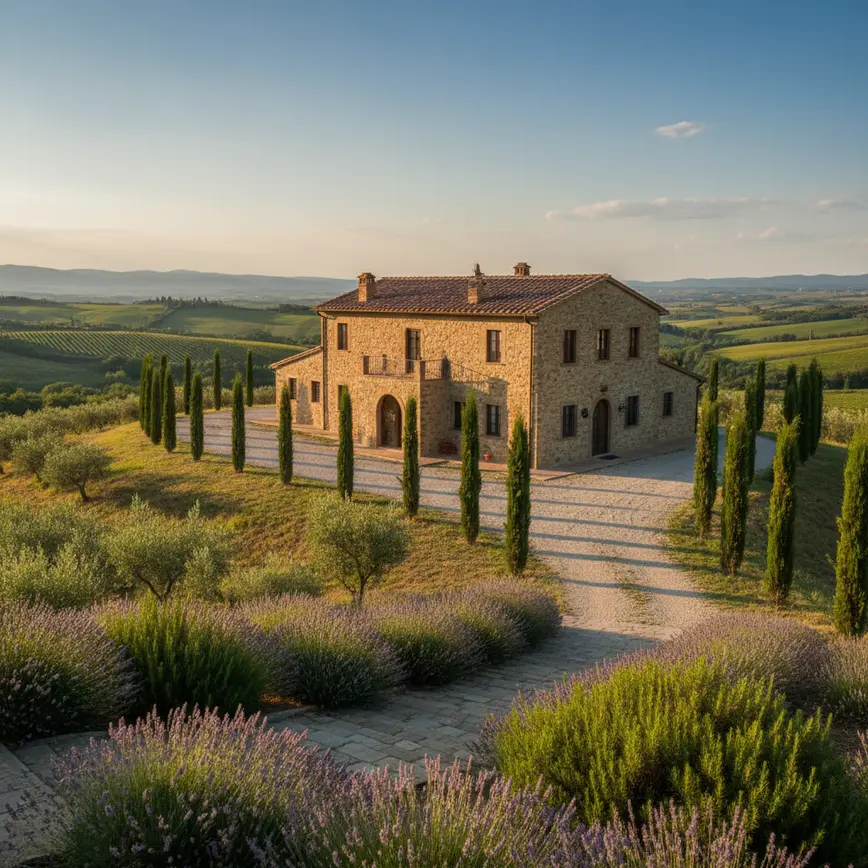
Tuscany represents the quintessential Italian dream for many. Its iconic landscapes of rolling hills, cypress trees, and historic vineyards, combined with Renaissance cities like Florence and Siena, create a powerful allure. Typical properties include beautifully restored farmhouses (casali) and historic apartments within medieval towns. The Chianti region is particularly sought after for its vineyards and rustic charm. The market here is mature and stable, with higher price points that reflect its enduring global popularity. This makes property in tuscany italy a solid, long-term lifestyle investment with strong potential for holiday rental income.
Lake Como: Lakeside Luxury
Nestled against the backdrop of the Alps, Lake Como is synonymous with elegance, luxury, and breathtaking natural beauty. The area is famous for its opulent villas, pristine gardens, and the exclusive atmosphere of towns like Bellagio, Varenna, and Como. The market for property lake como italy is decidedly high-end, attracting an international clientele of celebrities, executives, and those seeking a prestigious holiday retreat. A lake view property for sale italy here commands a premium, and the market is driven by both lifestyle buyers and investors looking to capitalize on the strong luxury tourism sector.
Puglia & Sicily: Southern Charm & Value
For those seeking a more authentic, rustic, and affordable Italian experience, the southern regions of Puglia and Sicily offer compelling opportunities. Puglia, the “heel” of Italy’s boot, is known for its unique cone-roofed trulli houses, ancient olive groves, and stunning Adriatic coastline. Sicily offers a rich tapestry of history, with Greek temples, Norman churches, and Baroque palazzos, alongside beautiful beaches and volcanic landscapes. The market for southern italy property for sale here has lower entry prices compared to the north, presenting excellent value and growing interest from international buyers and tourists.
Abruzzo: The Green Heart of Italy
Often overlooked, Abruzzo is known as “the green heart of Italy” for its vast national parks, protected reserves, and rugged mountain scenery. This region offers a unique combination of medieval hilltop towns and a nearby Adriatic coastline. The property market in Abruzzo is one of the most affordable in Italy, making it an attractive option for those looking to find cheap property for sale in italy away from the crowded tourist trails. It appeals to nature lovers, hikers, and buyers seeking an authentic slice of Italian life on a more modest budget.
Affordable Italy: Finding Cheap & €1 Property
The prospect of finding the cheapest property in italy, including the famous 1 euro houses in italy, is a reality, but it comes with significant caveats and hidden costs. These schemes were created by local municipalities in depopulated villages to attract new residents and stimulate the local economy by renovating abandoned buildings. While the headline price is tempting, it’s crucial to understand that these homes are almost always in a state of complete disrepair. A report from Culture Discovery noted that most €1 houses require full reconstruction, with renovation costs commonly ranging from €50,000 to €100,000 for basic work, plus significant legal and permit fees.
Beyond the financial commitment, buyers of €1 homes face numerous challenges. Municipalities impose strict deadlines for submitting renovation plans and completing the construction, often within three to five years, with financial penalties or forfeiture of a deposit for failing to meet them. The bureaucratic hurdles can be substantial, requiring the hiring of local professionals like surveyors (geometri), architects, and builders. As the legal information resource Impatria highlights, buyers often face strict municipal rules, bureaucratic slowdowns, and the risk of losing their deposit if project deadlines are missed, making these properties generally unsuitable for short-term or speculative investment.
FAQ: Buying Property in Italy
Can foreigners buy property in Italy?
Yes, foreigners can buy property in Italy. The primary condition is reciprocity, which means the buyer’s country of citizenship must permit Italian citizens to purchase property as well. Citizens of EU countries and some non-EU countries with bilateral agreements face no restrictions. For others, it’s essential to verify this reciprocity condition with the Italian Ministry of Foreign Affairs before starting the process.
Are $1 homes in Italy still available?
Yes, the €1 (or $1) house schemes are still active in many small Italian towns. These programs are designed to combat depopulation. However, the purchase price is symbolic. Buyers must commit to a full renovation project, typically costing €50,000 or more, within a strict timeframe set by the municipality. These properties are usually in a state of severe disrepair and require significant investment.
What town in Italy is offering homes for $1?
There is no single town; dozens of municipalities across Italy offer €1 homes. The list of participating towns changes frequently as properties are sold or new programs are launched. They are most common in regions like Sicily, Sardinia, Abruzzo, and Piedmont. To find active listings, it is best to check the official websites of individual municipalities (comuni) or dedicated online portals that track these schemes.
How long can I stay in Italy if I own a property?
Owning property in Italy does not automatically grant you the right to stay longer than tourist visa limits allow. For non-EU citizens, this is typically 90 days within a 180-day period. To stay longer, you must apply for a long-stay visa, such as an Elective Residency Visa, which requires proving you have sufficient independent income to support yourself without working in Italy. As noted by the legal firm Italyvisa.it, property purchase does not grant automatic residency.
What are the pitfalls of buying property in Italy?
The main pitfalls include navigating complex bureaucracy, unexpected renovation costs, and high taxation. Other risks involve unclear property boundaries or titles, the lengthy legal process, and dealing with local building regulations (piani regolatori). Non-EU buyers should also be aware that property ownership does not guarantee residency. Thorough due diligence by an independent lawyer is highly recommended to mitigate these risks.
Do you have to pay property tax in Italy?
Yes, property owners in Italy are required to pay annual property taxes. The main tax is called IMU (Imposta Municipale Unica). However, IMU is generally waived if the property is your primary residence (prima casa), unless it is classified as a luxury home. For second homes and properties owned by non-residents, IMU is mandatory. The amount varies depending on the municipality and the property’s cadastral value.
Is it a good time to buy property in Italy?
Whether it’s a good time to buy depends on your personal goals and the specific location. While some rural areas offer very low prices due to depopulation, prime markets in major cities and tourist hotspots remain stable and competitive. For lifestyle buyers, the enduring appeal of Italy is constant. For investors, careful research into regional market trends and rental yields is essential before making a decision.
How much deposit do I need to buy a house in Italy?
Typically, you will need a deposit of 10% to 30% of the purchase price. This is paid upon signing the preliminary contract (compromesso). If you are a non-resident seeking a mortgage from an Italian bank, you may be required to provide a larger down payment, often between 40% and 50%. It’s crucial to have funds ready for the deposit, taxes, and notary fees.
Limitations, Alternatives, and Professional Guidance
Research Limitations
It is important to acknowledge that property markets are dynamic, and data on pricing and availability can change quickly. This guide provides a general overview, but local regulations and market conditions can vary significantly between municipalities. Sources on the €1 house schemes often highlight the challenges, but successful projects do exist. More research may be needed on the long-term community impact of foreign investment in these small towns. For instance, research from the Anthropology of Architecture journal suggests a potential limitation, finding that “many houses are bought by outsiders and turned into holiday homes… which are left empty for most of the year.”
Alternative Approaches
For those not ready for the full commitment of ownership, there are alternative approaches. Long-term renting before buying allows you to experience a region firsthand, understand the local market dynamics, and decide if the area is a good long-term fit without a major financial outlay. Another option is fractional ownership, which provides access to a luxury property for a portion of the year. This model can offer the benefits of a holiday home with lower initial costs and shared maintenance responsibilities, making it a preferable choice for some.
Professional Consultation
It is highly recommended to seek professional guidance before signing any legally binding documents in Italy. You should consult an independent, bilingual lawyer (avvocato) who specializes in Italian property law to conduct due diligence and review contracts. A reputable real estate agent can provide local market knowledge, while a tax advisor (commercialista) can offer guidance on tax implications. To prepare for these consultations, have your finances in order, obtain your Codice Fiscale, and compile a list of specific questions.
Conclusion
Navigating the Italian property market requires an understanding of several key factors: the legal principle of reciprocity for foreign buyers, the essential role of the state-appointed notary, the diverse opportunities from the alpine north to the sun-drenched south, and the reality behind “cheap” property schemes. The process demands patience and thorough due diligence. However, with careful research and professional guidance, buying property for sale in italy can be a rewarding investment and lifestyle choice.
For more in-depth guides and analysis on major trends that impact significant life decisions, we invite you to explore our other articles. Read More to stay informed.
References
- Ministero degli Affari Esteri e della Cooperazione Internazionale. (n.d.). Condition of reciprocity. Retrieved from https://www.esteri.it/en/politica-estera-e-cooperazione-allo-sviluppo/diplomazia-giuridica/condizreciprocita/
- Mazzeschi. (n.d.). Guidelines for Foreigners to Buy a Property in Italy. Retrieved from https://www.mazzeschi.it/guidelines-for-foreigners-to-buy-a-property-in-italy/
- Italyvisa.it. (n.d.). Property Incentives for Foreigners. Retrieved from https://italianvisa.it/property-incentives-foreigners/
- Anthropology of Architecture. (n.d.). The 1 Euro Houses Initiative. Retrieved from https://www.anthropologyofarchitecture.com/the-1-euro-houses-initiative
- OSDV (Osservatorio sulle Strategie di Valorizzazione). (n.d.). Understanding the benefits of 1 euro houses in Italy. Retrieved from https://www.osdv.org/understanding-the-benefits-of-1-euro-houses-in-italy/
- Culture Discovery. (n.d.). The Truth About Italy’s 1 Euro Homes. Retrieved from https://www.culturediscovery.com/blog/personal/the-truth-about-italys-1-euro-homes-why-theyre-not-such-a-great-deal-after-all/
- Impatria. (n.d.). 1 Euro Houses in Italy for Foreigners. Retrieved from https://impatria.com/en/magazine/1-euro-houses-italy-foreigners/