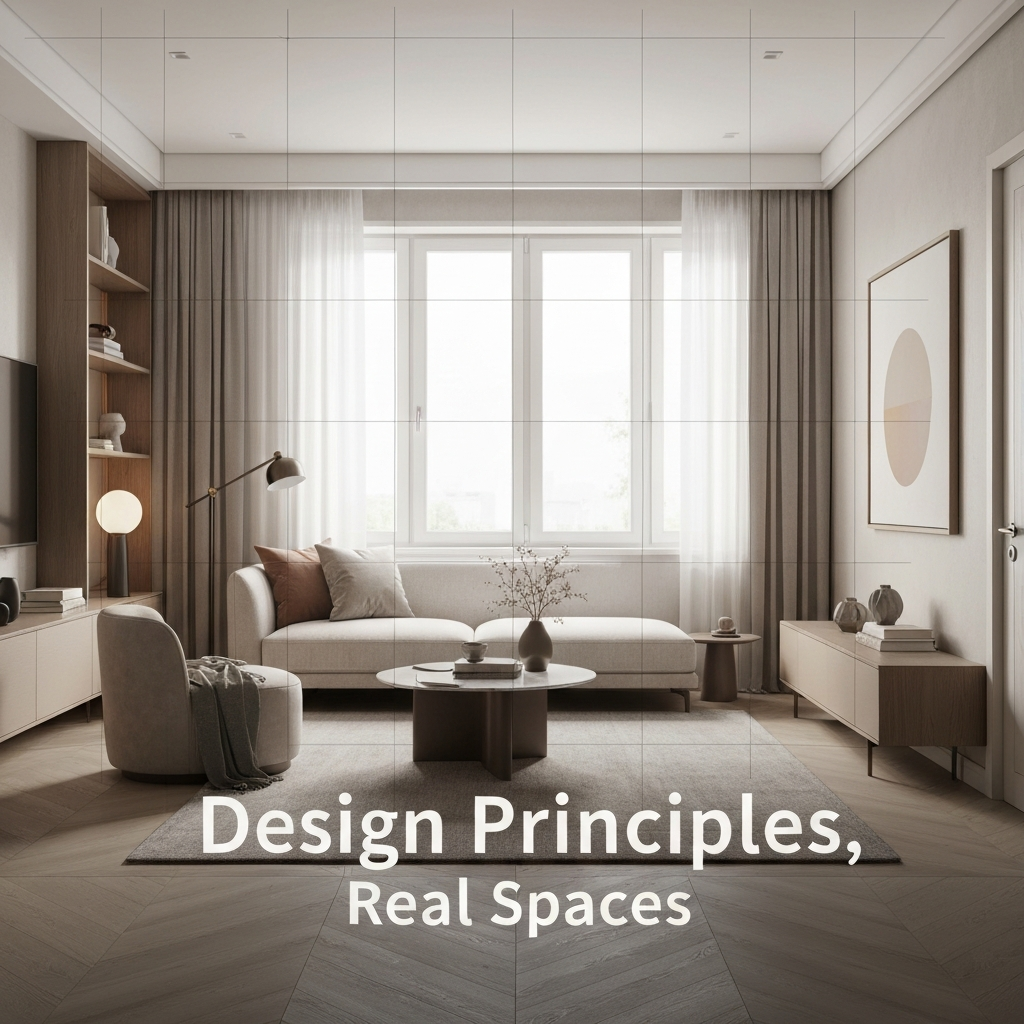
You've read the articles and pinned the inspiration. You know the seven principles of interior design by heart: balance, rhythm, harmony, emphasis. But when you look at your own living room, something is missing. The theory makes sense, but it feels impossible to translate into a real-world decorated space. This is the most common frustration in home decorating, and it's a significant gap all other guides leave open.
This article is different. We're not just going to define the principles; we're going to give you a comprehensive, step-by-step guide for applying each one. Using relatable examples and a problem/solution framework, this is the definitive how to apply interior design principles manual. We will walk you through the actual interior designing process, turning abstract concepts into actionable steps that solve your biggest decorating challenges.
First, Let's Clarify: Interior Design vs. Interior Decorating
Before we begin the process of interior design, it's crucial to understand a key distinction. While often used interchangeably, interior design and interior decorating are fundamentally different. Interior decorating is the art of furnishing and adorning a space with items like furniture, paint, and accessories to make it aesthetically pleasing. It's the final layer.
Interior design, however, is both an art and a science. It involves a deeper, more structured approach that includes spatial planning, ergonomics, and understanding the user's behavior to optimize the functionality of a space. A designer works with the architectural shell itself, while a decorator works with the finished space. This guide focuses on the design process, giving you the tools to think like a designer.
The Core Blueprint: Understanding the 7 Principles of Interior Design
You've likely heard of the principles of interior design. These are the foundational rules widely recognized by interior design professionals that govern how elements work together to create a visually appealing and functional room. These aren't just abstract concepts from art class; they are the strategic framework for every well-designed space.
According to Kathryn Interiors, the seven basic principles of interior design include balance, emphasis, rhythm, proportion and scale, contrast, harmony and unity, and details.
Knowing these interior design principles and elements is the first step. But the real challenge—and what this guide solves—is learning the step by step interior design process to apply them effectively.
The Step-by-Step Interior Design Process: From Blank Canvas to Finished Room
This is where theory becomes practice. The following stages of the interior design process break down how to implement each principle methodically.
Beyond the Rules: Essential Interior Decorating Basics
Mastering these principles is the core of the design process in interior design. It transforms you from someone who buys things for a room into someone who designs a cohesive space. Once you have this foundation, you can refine your space with more specific ideas and quick wins. For a deeper dive into practical, everyday enhancements, explore our detailed guide on essential home decorating tips. These interior decorating basics will help you add the final layer of personality and polish to your well-designed room.
---
By the Residence Magazine Editorial Team
Frequently Asked Questions
What are the 7 principles of interior design?
The seven principles of interior design are Balance, Emphasis (Focal Point), Rhythm, Proportion & Scale, Contrast, Harmony & Unity, and Details. They are the foundational guidelines for creating a functional and aesthetically pleasing space.
What is the first step in the interior design process?
The first practical step in the interior design process is to establish Balance. This involves deciding on your layout (symmetrical, asymmetrical, or radial) and arranging your largest furniture pieces to create a sense of visual equilibrium in the room.
How do I use contrast without making my room feel chaotic?
To use contrast effectively, apply it in multiple forms, not just color. Mix textures (rough and smooth), shapes (curvy and straight), and finishes (matte and glossy). Using the 60-30-10 color rule also helps control color contrast, preventing it from becoming overwhelming.
What is the 60-30-10 rule for color?
The 60-30-10 rule is a classic decorating guideline for creating a balanced color palette. It states that 60% of your room should be a dominant color (walls), 30% should be a secondary color (furniture, textiles), and 10% should be an accent color (accessories, art).