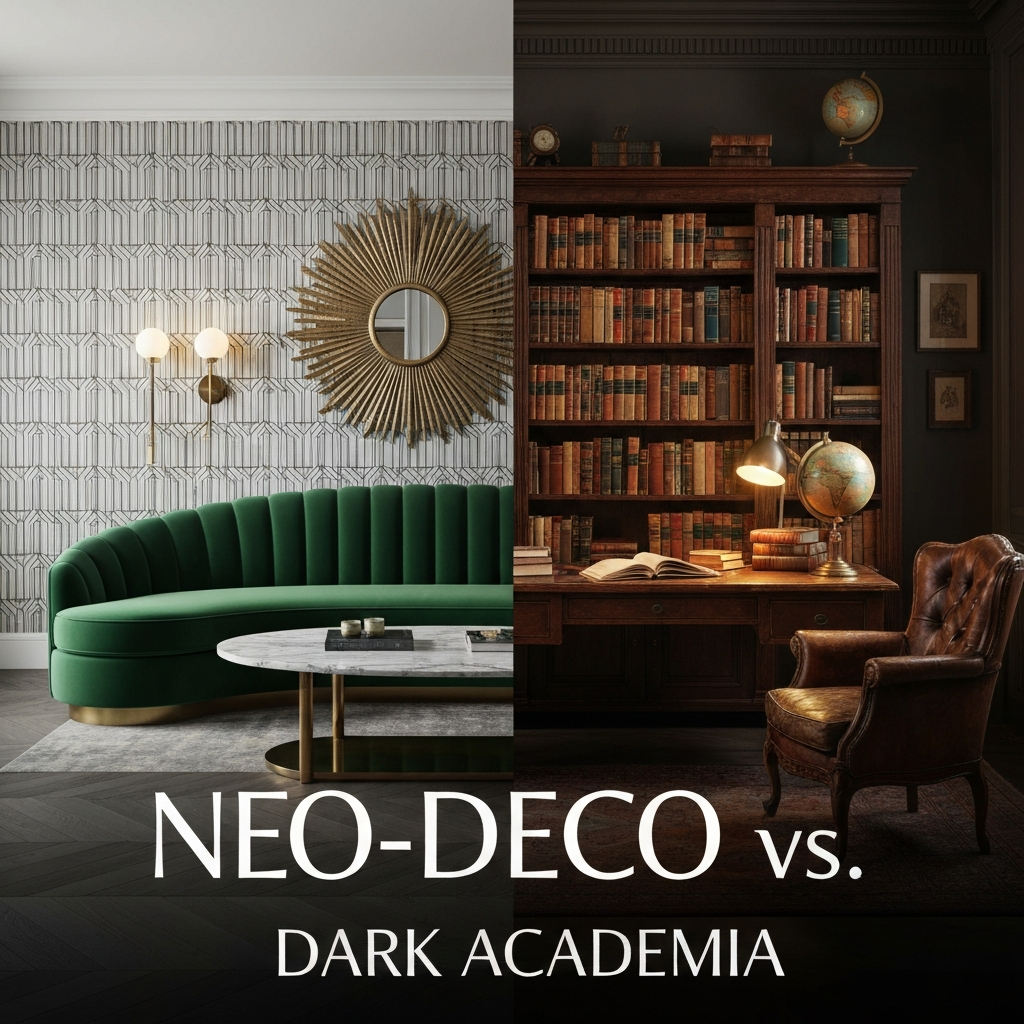
In the dynamic world of interior design, two aesthetics have recently captured the collective imagination: the sleek, forward-looking allure of Neo-Deco and the moody, intellectual charm of Dark Academia. While both styles offer a dramatic departure from mainstream minimalism, they are often misunderstood or mistakenly used interchangeably. This article cuts through the confusion. We will provide the definitive breakdown, exploring the core philosophies, key visual elements, and distinct atmospheres of each. Forget generic descriptions; this is a direct, side-by-side analysis designed to clarify the difference between Neo-Deco and Dark Academia once and for all. As we explore these two specific aesthetics, it's helpful to see how they fit within the broader conversation about the latest interior design trends.
Understanding the Neo-Deco Aesthetic
Neo-Deco, also known as New Art Deco or Deco Revival, is a contemporary interior design movement that reinterprets the 1920s Art Deco aesthetic for 21st-century spaces, gaining traction in the early 2010s and surging in popularity into the 2020s. It's a style defined by glamour, symmetry, and a forward-looking optimism. The Neo-Deco interior design philosophy champions bold yet clean lines, luxurious materials, and a sense of sophisticated drama without the ornate fussiness of its predecessor.
Core Elements of Neo-Deco Design
To truly grasp the Neo-Deco aesthetic, you need to recognize its key components. This style is built on a foundation of specific visual cues:
- Geometric Patterns: Think bold, repeating patterns like sunbursts, chevrons, and stylized fans on wallpapers, textiles, and inlays.
- Rich Materials: Neo-Deco decor embraces opulence. Expect to see polished marble, lacquered wood, velvet, brass, and chrome used generously.
- Symmetry and Order: There is a clear, intentional order to Neo-Deco spaces. Furniture is often arranged symmetrically, creating a sense of balance and visual harmony.
- Curved Forms: Sofas with rounded backs, arched doorways, and circular mirrors are common, softening the strong geometric patterns.
[Image: A luxurious Neo-Deco living room featuring a velvet curved sofa, geometric wallpaper, and brass accents. Credit: Designer/Photographer Name]
Is Neo-Deco Minimalist? Unpacking a Common Misconception
One of the most frequent questions is, is Neo-Deco minimalist? The answer is a definitive no. While it values clean lines and uncluttered spaces, Neo-Deco is not minimalist. Minimalism in interior design is a philosophy focused on stripping a space down to its core function and essential elements, prioritizing simplicity and a lack of superfluous ornamentation. In contrast, Neo-Deco is about adding curated, luxurious, and decorative elements. The focus is on high-impact style and glamour, which is fundamentally different from the ascetic principles of minimalism. The Neo-Deco color palette often involves deep jewel tones like emerald green, sapphire blue, and rich burgundy, accented with black, white, and metallics—a far cry from minimalism's typically neutral scheme.
Clearing the Confusion: Neo-Deco vs Art Deco
While they share a name, understanding the Neo-Deco vs Art Deco distinction is key. Art Deco utilized highly prized exotic materials like ivory and tortoiseshell to signify luxury and status, often combined with high-gloss woods and modern metals. Neo-Deco takes the spirit of this high style deco—its geometry, glamour, and symmetry—but applies it with a more modern, restrained hand. The lines are cleaner, the color palettes can be more subdued, and the overall feel is less about historical reproduction and more about contemporary luxury. This focus on contemporary luxury is a key feature in many of the latest interior design trends.
Exploring the Dark Academia Aesthetic
The Dark Academia aesthetic is a celebration of knowledge, literature, and the arts, wrapped in a moody, nostalgic atmosphere. It evokes the feeling of an old university library or a professor's study, filled with classic books, curious artifacts, and a sense of intellectual pursuit. Dark Academia interior design is less about a specific period and more about creating a specific, scholarly mood.
The Defining Elements of Dark Academia Decor
At its heart, the Dark Academia style is about texture, history, and intellectualism. Its core elements include:
- Vintage and Antique Furniture: Think heavy, dark wood bookcases, leather-bound armchairs, and sturdy writing desks.
- Abundant Books: Books are not just for reading; they are a primary decor element, stacked on floors, shelves, and tables.
- Classical Art and Sculpture: Busts of classical figures, framed oil paintings (especially portraits and landscapes), and anatomical charts are staples.
- Natural and Tactile Materials: Wool, tweed, dark wood, worn leather, and brass are the foundational Dark Academia materials.
[Image: A cozy Dark Academia study with dark wood bookcases filled with old books, a leather armchair, and warm lamplight. Credit: Designer/Photographer Name]
How to Create a Dark Academia Style Room
If you want to know how to create a Dark Academia style room, focus on layering and atmosphere. Start with a deep, moody Dark Academia color palette—shades of brown, forest green, charcoal grey, and burgundy are perfect. Incorporate Dark Academia furniture that feels like it has a story to tell. Finally, focus on Dark Academia lighting; use warm, low-level light from table lamps and candles to create an intimate, studious ambiance.
Beyond the Shadows: Dark Academia vs Light Academia
It's important to note that Dark Academia has a brighter counterpart. The main difference in the Dark Academia vs Light Academia debate is the overall mood. While Dark Academia is melancholic and mysterious, the Light Academia aesthetic is more optimistic and cheerful. It uses a lighter color palette (creams, beiges, soft gold) and focuses on themes of poetry, art, and nature in the daylight, but shares the same core love for learning and classicism.
The Ultimate Showdown: Neo-Deco vs Dark Academia Side-by-Side
Now for the ultimate comparison. What is the difference between Neo-Deco and Dark Academia? This table breaks down the core distinctions in the Neo-Deco vs Dark Academia interior design battle.
| Feature | Neo-Deco Aesthetic | Dark Academia Aesthetic |
|---|---|---|
| Core Philosophy | Optimism, glamour, modernity, luxury | Nostalgia, intellectualism, tradition, mystery |
| Color Palette | Jewel tones (emerald, sapphire), black, white, metallics | Earth tones (brown, forest green), charcoal, burgundy |
| Key Materials | Velvet, marble, brass, chrome, lacquered wood | Dark wood, worn leather, wool, tweed, paper |
| Furniture Style | Curved sofas, symmetrical layouts, statement pieces | Antique or vintage bookcases, leather armchairs, heavy desks |
| Dominant Shapes | Geometric patterns, sunbursts, arches, clean lines | Organic, complex textures, the clutter of books and art |
| Overall Mood | Sophisticated, glamorous, bold, energetic | Studious, cozy, melancholic, intimate |
This direct comparison clearly illustrates that while both styles are dramatic, their inspirations, materials, and goals are fundamentally different. The Neo-Deco vs Dark Academia style choice depends entirely on the atmosphere you wish to create.
A Harmonious Blend: Can You Mix Neo-Deco and Dark Academia?
After seeing the differences, the next logical question is, can you mix Neo-Deco and Dark Academia? Surprisingly, yes. Blending Neo-Deco and Dark Academia can create a unique and deeply personal space, but it requires a careful hand. The key is to find common ground.
- Shared Palette: Use a dark, moody color as your base, which works for both styles. A deep charcoal or navy wall can be a glamorous backdrop for Neo-Deco's metallic accents while also providing the cozy enclosure for Dark Academia's scholarly vibe.
- Material Bridge: Mix a plush velvet Neo-Deco sofa with a classic Dark Academia dark wood bookshelf. The shared sense of richness and quality can tie them together.
- 80/20 Rule: Choose one style as your dominant theme (80%) and add elements of the other as an accent (20%). For example, a primarily Dark Academia room could feature a bold, geometric Neo-Deco rug or a striking brass sunburst mirror.
Mixing Neo-Deco and Dark Academia is an advanced design choice, but when done correctly, it results in a space that feels both intellectually rich and unapologetically glamorous.
Frequently Asked Questions
What is the main difference between Neo-Deco and Dark Academia?
The main difference lies in their core philosophy and mood. Neo-Deco is glamorous, optimistic, and forward-looking, characterized by bold geometric patterns, symmetry, and luxurious materials like marble and brass. Dark Academia is nostalgic, intellectual, and moody, focusing on creating a scholarly atmosphere with dark woods, vintage books, and classical art.
Is Neo-Deco a minimalist style?
No, Neo-Deco is not minimalist. Minimalism focuses on stripping away non-essential elements for a sparse look. Neo-Deco, in contrast, is about adding curated, luxurious, and decorative elements like rich textures, metallic accents, and bold patterns to create a glamorous and sophisticated space.
What is the Dark Academia color palette?
The Dark Academia color palette is deep, rich, and moody. It primarily consists of dark earth tones like chocolate brown, forest green, and charcoal grey, often accented with the deep reds of burgundy or the gold of old paper and brass lighting.
Can you mix Neo-Deco and Dark Academia styles?
Yes, you can mix Neo-Deco and Dark Academia, but it requires a thoughtful approach. The best way is to find common ground through a shared dark color palette, bridge the styles with high-quality materials like velvet and dark wood, and follow an 80/20 rule where one style dominates and the other serves as an accent.