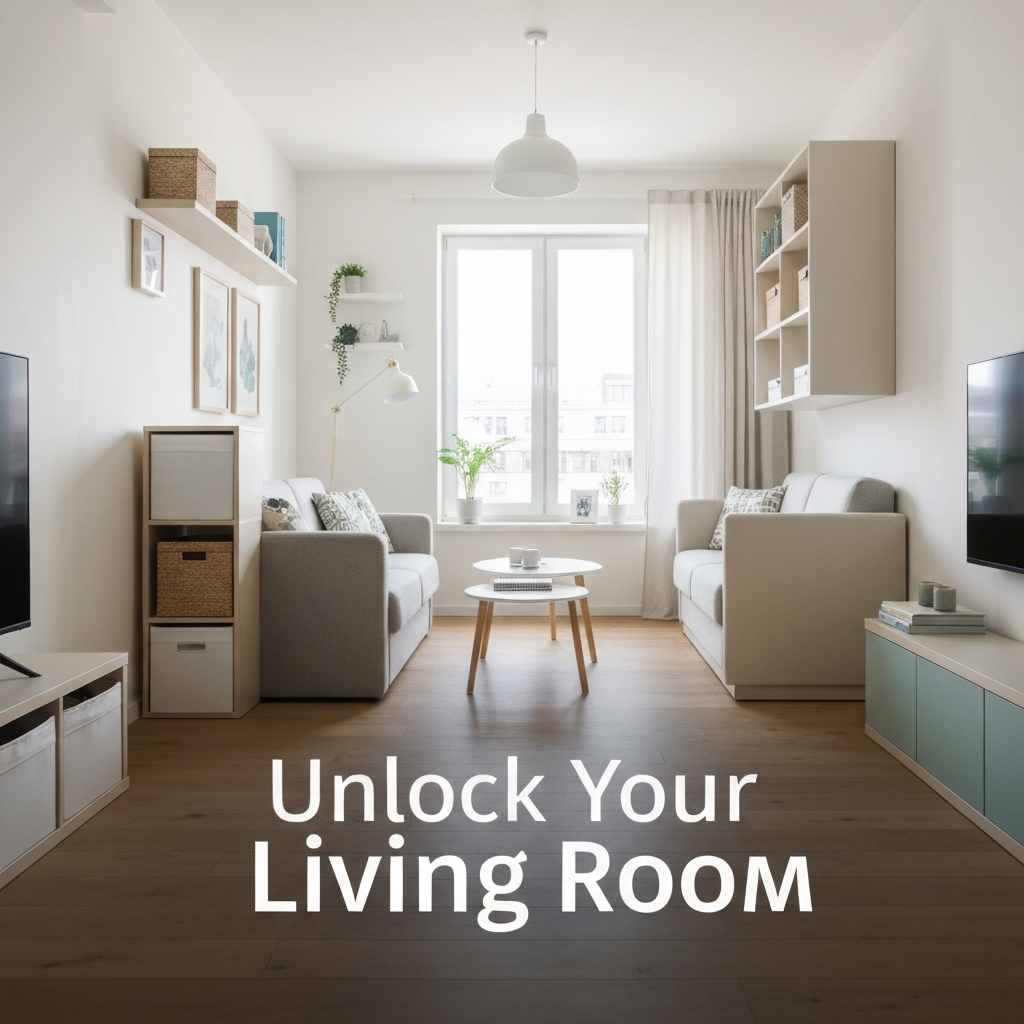
Is your small living room causing you big frustration? You're not alone. Many people struggle with cramped spaces that feel cluttered and dysfunctional, and most online advice offers vague tips instead of concrete solutions. The strategic opportunity lies in providing what others don't: clear, actionable blueprints. This article cuts through the noise. We are providing 10 distinct, actionable small living room layouts, each tailored to a specific challenge like narrow walls, open-concept plans, or awkward corners. You will learn not only what to do but also what not to do, with a clear do's and don'ts section for each layout. Prepare to transform your space from cramped to comfortable with these proven floor plans.
The Foundation: Core Principles of Small Space Arrangement
Before diving into specific floor plans, it's crucial to understand the core principles of how to arrange furniture in a small living room. These fundamentals apply to any layout and are key to your success.
General Furniture Arrangement
The goal is to create a sense of openness and flow. Start by identifying the room's focal point—this could be a window, a fireplace, or a media unit. Arrange your largest piece of furniture, typically the sofa, to face this point. Ensure there are clear pathways; you should be able to walk through the room without bumping into things. According to interior design guidelines, a standard clearance of 18 inches is recommended between a sofa and coffee table for comfortable movement, and a minimum of 18 inches for walkways around furniture. These small living room furniture arrangement ideas prioritize function and feel over clutter.
10 Actionable Small Living Room Layouts
Here are 10 distinct, actionable layouts designed for specific challenges. Each one is a practical floor plan you can implement today.
1. The Classic Conversational
Best for: Square or slightly rectangular rooms.
This layout features a sofa and two armchairs facing each other over a central coffee table, creating an intimate area for conversation.
- Do: Use a rug to anchor the entire seating area.
- Don't: Push all the furniture against the walls. Pulling furniture away from walls, even by a few inches, creates spatial depth and improves traffic flow, contributing to a more expansive perception of the room.
2. The Narrow Gallery
Best for: Long, narrow rooms.
This is the best furniture layout for a narrow living room. Place the sofa against one of the long walls and a slim console or media unit against the opposite wall. Use two small ottomans or a single armchair at one end to complete the space without blocking the walkway.
- Do: Use a long, narrow rug to emphasize the room's length.
- Don't: Use bulky, deep furniture that will encroach on the pathway.
3. The Open-Concept Divider
Best for: Studio apartments or open-plan homes.
Use your largest piece of furniture, like an L-shaped sectional, to create a visual "wall" that separates the living area from the dining or kitchen space. The back of the sofa acts as a room divider.
- Do: Place a slim console table behind the sofa for storage and a defined entry to the living space.
- Don't: Use furniture that is too tall, as it will block light and make the overall space feel smaller.
4. The Corner Hub
Best for: Rooms with awkward corners or multiple doorways.
Place a small sectional sofa snugly into a corner to maximize seating while leaving other walls free. This consolidates the main furniture, opening up the rest of the room.
- Do: Add a round coffee table to soften the corner and improve flow.
- Don't: Neglect the vertical space above the sectional; use floating shelves or art.
5. The Minimalist Media Center
Best for: TV-focused living rooms.
Center a low-profile media unit on the main wall with the sofa directly opposite. Keep other furniture to a minimum—perhaps one sleek armchair and a small C-table.
- Do: Wall-mount the television to save floor space.
- Don't: Use an oversized media unit that dominates the room.
6. The Symmetrical Setup
Best for: Formal living rooms with a central feature like a fireplace.
Place a sofa facing the focal point with two matching armchairs flanking it. This creates a balanced, traditional look.
- Do: Use pairs of furniture and decor (e.g., two end tables, two lamps) to enhance the symmetry.
- Don't: Clutter the space with unnecessary items; the beauty is in its simplicity.
7. The Floating Oasis
Best for: Larger "small" rooms where you can pull furniture off the walls.
Create a cozy island by floating the sofa and chairs in the center of the room, anchored by a large area rug. This makes the room feel more expansive by showing off the floor space around the perimeter.
- Do: Ensure all pieces in the arrangement have their front legs on the rug.
- Don't: Forget to ground the space with a coffee table or large ottoman.
8. The Bay Window Nook
Best for: Rooms with a prominent bay window.
Make the bay window the star by placing a small settee or two comfortable armchairs within the nook. This creates a dedicated reading or conversation spot and frees up the rest of the room.
- Do: Use light, airy window treatments that don't block the natural light.
- Don't: Block the window with a large sofa.
9. The L-Shaped Flow
Best for: L-shaped living/dining combo rooms.
Arrange the living room furniture in the larger part of the "L," using a sofa and one or two chairs. Keep the furniture arrangement contained to its zone to maintain a clear path to the dining area.
- Do: Use a rug to clearly define the living room zone.
- Don't: Let furniture from the living area spill into the dining area's walkway.
10. The Multi-Functional Marvel
Best for: The smallest of spaces, like a den or office combo.
This layout relies on smart furniture. Use a daybed or a small sleeper sofa, a coffee table that lifts to dining height, and nesting end tables.
- Do: Prioritize pieces that serve at least two purposes.
- Don't: Overlook vertical storage solutions to keep floor space clear.
Beyond the Layout: Tricks to Maximize Your Space
Once you've chosen a layout, use these visual and practical tricks to enhance the feeling of spaciousness.
Creating the Illusion of More Space
The easiest way to make a small living room feel bigger is through visual manipulation. Mirrors create virtual images and reflect light, increasing perceived depth and visual information, while light colors have higher reflectance, making room boundaries appear farther away and less enclosing, thus making a room feel larger.
Smart Storage and Furniture Solutions
Effective small living room storage solutions are non-negotiable. Look for multi-functional furniture for small spaces, such as ottomans with hidden storage, coffee tables with drawers, or media units that offer ample concealed space. Don't forget to use your walls. Implementing vertical space living room design with tall, narrow bookshelves or floating shelves draws the eye upward and keeps clutter off the floor.
Common Pitfalls: Layout Mistakes to Avoid
Knowing what not to do is as important as knowing what to do. Here are some common issues to sidestep.
Identifying and Avoiding Layout Mistakes
Overcoming Design Challenges
Every small space has its quirks. Whether it's a lack of natural light, an awkward shape, or too many doors, the key is to embrace the limitation and turn it into a feature. The right furniture placement in a small living room can solve most problems. For example, use a narrow console table to define an entryway where one doesn't exist. While these layouts solve specific problems, finding your unique style is the next step. For broader inspiration, explore these comprehensive living room interior design ideas.
Frequently Asked Questions
How do you arrange furniture in a small living room to maximize space?
To maximize space, start by choosing a focal point and arranging furniture to create clear pathways. Pull furniture away from the walls to create an illusion of space. Use multi-functional pieces like storage ottomans, and utilize vertical space with tall bookshelves or floating shelves to keep the floor clear.
What is the best furniture layout for a narrow living room?
The best layout for a narrow living room is the "Gallery" layout. Place your sofa against one of the long walls and a slim media console or shelving unit on the opposite wall. This keeps the central walkway clear, making the room feel functional and less like a hallway. Use a long, narrow rug to accentuate the room's length.
What are the biggest small living room layout mistakes to avoid?
The biggest mistake is pushing all furniture against the walls, which makes a room feel smaller. Other common errors include using furniture that is too large for the room's scale, blocking natural light sources with bulky pieces, and having inadequate storage, which leads to a cluttered look.